China remains a major force in global steel manufacturing, supported by extensive mills, ports, and engineering supply chains. The World Steel Association reported approximately 1.88 billion tonnes of global crude steel production in 2024. China contributed more than half of that output. This scale helps explain its strong position in the international Welded Steel Pipe market.
Yet production volume alone does not identify the best supplier. Buyers need evidence of consistent dimensions, weld quality, corrosion protection, and delivery performance. The OECD Steel Market Developments reports continue to highlight overcapacity pressure and changing trade conditions. These factors make supplier evaluation more complex than comparing prices.
This guide examines ten leading Chinese welded pipe suppliers through practical criteria. These include manufacturing capability, product range, export experience, inspection systems, certifications, and project references. Relevant standards may include API 5L, ASTM specifications, EN requirements, and ISO quality systems. However, certifications must be verified for the exact factory and product line. A sales office is not always the manufacturing source.
Details matter.
A reliable supplier should provide mill test certificates, heat numbers, dimensional records, and traceable inspection results. Buyers should also review coating facilities, pipe-forming methods, non-destructive testing, and packing conditions. Public company data, industry directories, and supplier documentation can support this assessment. Still, no ranking is perfect. Market conditions change, and smaller manufacturers may offer stronger service for specific projects. This list therefore aims to provide a practical starting point, not an absolute verdict.
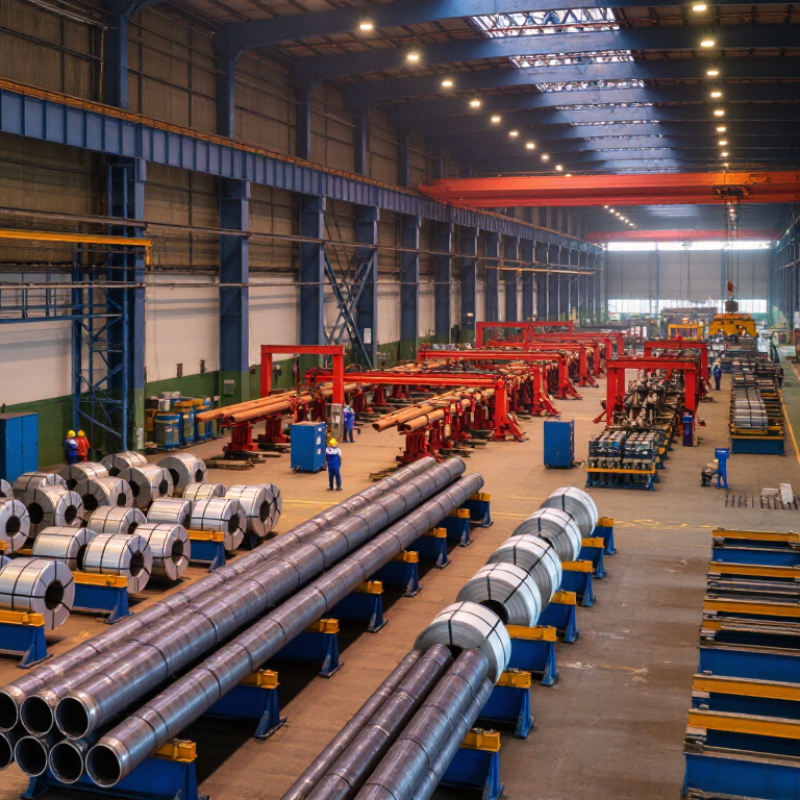
Welded steel pipe suppliers in China are manufacturers and trading companies that produce, process, and export pipes for construction, water systems, energy projects, and industrial equipment. Their products are formed from steel coils or plates, then joined through electric resistance welding, spiral welding, or longitudinal welding. The supplier’s role often extends beyond production. It may include cutting, beveling, coating, threading, inspection, packing, and shipping coordination.
A reliable supplier should explain its production process clearly. Ask about steel grades, wall thickness tolerance, outer diameter accuracy, and welding inspection methods. Factory records, material certificates, hydrostatic test reports, and independent inspection options provide useful evidence. During practical sourcing work, buyers should compare samples with the written specification. Small differences in coating thickness or pipe length can affect installation costs.
Details matter. A polished catalog can still hide weak process control. Check whether the supplier maintains traceable heat numbers from raw material to finished pipe. Review how pipes are protected during loading; damaged ends and wet packaging are common, avoidable problems. Suppliers serving overseas projects should also understand export documents, container limits, and destination standards. Communication quality is another practical indicator. Clear replies usually make technical changes easier to manage, though this is not proof of manufacturing strength. A supplier may have advanced equipment but limited experience with unusual dimensions. That gap matters. Buyers should request drawings, inspection plans, and realistic production schedules before placing large orders.
| Rank | Supplier Code | Main Production Region | Primary Pipe Processes | Typical Outside Diameter Range | Typical Wall Thickness | Common Product Standards | Steel Grades Commonly Offered | Typical Applications | Export Markets |
|---|---|---|---|---|---|---|---|---|---|
| 1 | Supplier 01 | Tianjin | ERW, hot-dip galvanized welded pipe, spiral welded pipe | 21.3–2,200 mm | 1.5–25 mm | ASTM A53, ASTM A500, API 5L, EN 10217 | Q235B, Q355B, Grade B, X42–X60 | Water transmission, construction, oil and gas | Asia, Africa, Middle East, South America |
| 2 | Supplier 02 | Hebei | ERW, SSAW, LSAW | 20–3,200 mm | 2–30 mm | API 5L, ASTM A252, ASTM A671, EN 10219 | Q235B, Q355B, L245–L415 | Piling, structural engineering, pipelines | Middle East, Southeast Asia, Africa |
| 3 | Supplier 03 | Jiangsu | ERW, precision welded tube, galvanized pipe | 10–610 mm | 0.8–20 mm | ASTM A500, EN 10305, EN 10219, JIS G3466 | Q235, Q345, S235JR, S355JR | Mechanical parts, furniture, machinery, structures | Europe, North America, East Asia |
| 4 | Supplier 04 | Shandong | ERW, SSAW, coated welded pipe | 21.3–2,400 mm | 1.5–26 mm | ASTM A53, API 5L, ISO 3183, EN 10217 | Q235B, Q355B, L245, L360 | Water projects, energy infrastructure, construction | Middle East, Africa, South America |
| 5 | Supplier 05 | Zhejiang | Stainless steel welded pipe, precision tube, ERW | 6–1,220 mm | 0.5–25 mm | ASTM A312, ASTM A249, EN 10217-7, JIS G3448 | 304/304L, 316/316L, 321, 904L | Food processing, chemical equipment, water treatment | Europe, North America, Southeast Asia |
| 6 | Supplier 06 | Guangdong | Stainless steel welded pipe, decorative tube, sanitary tube | 6–630 mm | 0.6–16 mm | ASTM A312, ASTM A554, EN 10217-7, JIS G3446 | 201, 304, 304L, 316L | Architecture, food equipment, sanitary systems | Asia, Oceania, North America |
| 7 | Supplier 07 | Hunan | LSAW, SSAW, heavy-wall welded pipe | 406–2,032 mm | 8–35 mm | API 5L, ISO 3183, ASTM A252, EN 10219 | Q355, L360, L415, X60 | Long-distance pipelines, piling, bridges | Central Asia, Middle East, Africa |
| 8 | Supplier 08 | Liaoning | ERW, SSAW, structural welded pipe | 21.3–2,200 mm | 2–28 mm | ASTM A500, ASTM A53, API 5L, EN 10219 | Q235B, Q355B, S275JR, S355JR | Steel structures, municipal engineering, utilities | Russia and CIS, Asia, Middle East |
| 9 | Supplier 09 | Fujian | ERW, galvanized welded pipe, hollow structural section | 21.3–610 mm | 1.2–20 mm | ASTM A53, ASTM A500, EN 10219, JIS G3444 | Q235B, Q345B, S235JR, S355JR | Scaffolding, greenhouse systems, construction | Southeast Asia, Africa, Oceania |
| 10 | Supplier 10 | Sichuan | SSAW, ERW, anti-corrosion coated pipe | 219–2,400 mm | 4–30 mm | API 5L, ISO 3183, ASTM A53, EN 10217 | Q235B, Q355B, L245, L415 | Water supply, mining, petroleum infrastructure | Central Asia, Southeast Asia, Africa |
The supplier names are intentionally anonymized. The specifications shown are representative product ranges and commonly applied international standards for welded steel pipe manufacturers in China; exact availability depends on the supplier, production line, order quantity, and inspection requirements.