
Choosing a Chenglong Emergency Vehicle in 2026 requires more than checking horsepower, payload, or cabin size. It demands evidence, field experience, and disciplined risk assessment. The World Health Organization’s Global Status Report on Road Safety 2023 estimates 1.19 million annual road deaths worldwide. That figure makes safe vehicle design impossible to treat as a secondary feature.
The report also highlights speed management, occupant protection, and safer road systems. These priorities matter when an emergency truck moves through rain, darkness, crowded streets, or narrow rural roads. A Chenglong Emergency Vehicle should therefore be judged by braking stability, visibility, rescue-body integration, electrical reliability, and service support. Open the side compartment. Check the latch. Imagine a responder wearing wet gloves.
Fire-service safety educator Billy Goldfeder often emphasizes a practical principle: “You cannot help anyone if you do not arrive safely.” The sentence is simple. Its meaning is not.
NFPA’s emergency vehicle safety guidance similarly stresses vehicle inspection, crew restraint, driver training, and operational readiness. These requirements should shape the buying process, even when local specifications differ. Buyers should request test records, maintenance schedules, warranty terms, and documented performance under realistic loads. Marketing language is not enough.
There is also an uncomfortable point. No vehicle removes human error. A powerful engine may encourage hurried decisions. A larger body may complicate turning and parking. A cheaper purchase may create higher downtime later. This guide examines how to balance those weaknesses with mission needs, verified specifications, and long-term operating evidence before selecting a Chenglong Emergency Vehicle.
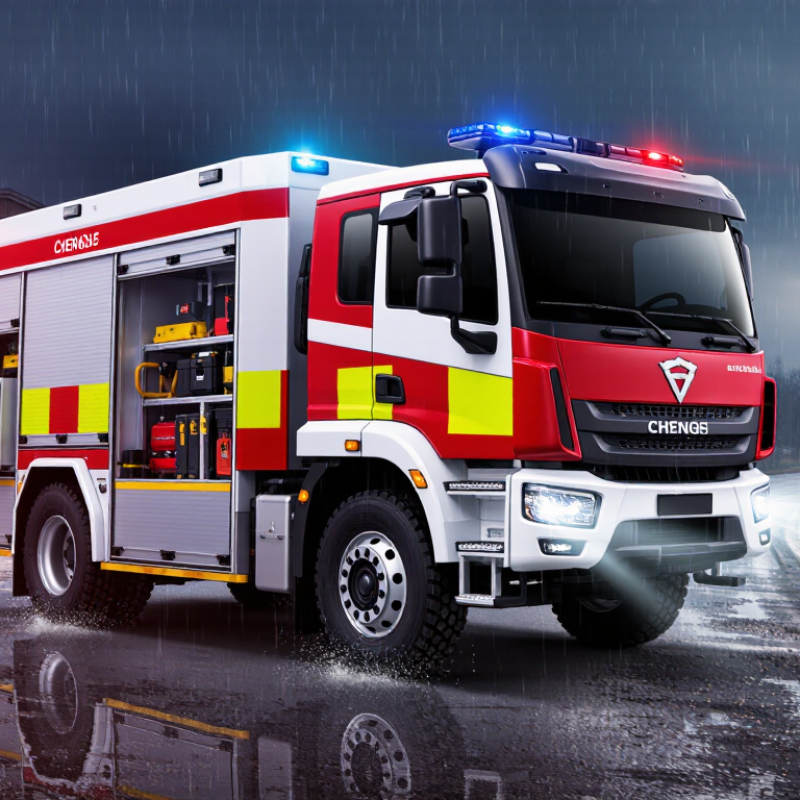
Choosing an emergency vehicle should begin with the mission, not the brochure. Describe the calls it must answer every week. Is it for urban medical response, roadside rescue, wildfire support, or mixed duties? Each role changes the required layout, payload, crew space, and driving performance. A vehicle serving narrow city streets needs different strengths from one crossing muddy rural roads.
Define operating requirements in measurable terms. Record crew size, daily distance, response time, terrain, weather, and shift length. Calculate the weight of medical kits, tools, water, fuel, protective clothing, and replacement supplies. Include future equipment, not just today’s inventory. Measure turning radius and parking height at real stations. Equipment should remain reachable while staff wear gloves. Doors must open safely beside traffic. Interior lighting should support night work without blinding the driver.
Build the mission profile from actual routes and incident records. Test the vehicle on steep roads, tight corners, rough surfaces, and repeated stop-start driving. During one review, we overestimated storage needs and added a cabinet that narrowed the aisle. The design looked efficient on paper, but crews disliked it in practice. That mistake was useful. Ask drivers and technicians to inspect service access, cooling performance, tire wear, and power capacity. More capacity is not always better. A practical vehicle must balance readiness, safety, maintenance, and honest daily use.

Define the emergency mission first, then match range, usable payload, and crew capacity to the operating scenario.
The chart uses representative procurement benchmarks commonly applied to emergency-fleet planning: operating range is shown in kilometres, usable payload in kilograms, and crew capacity in persons. Urban ambulance, fire response, technical rescue, and mobile command missions require different vehicle priorities, so the mission profile should be defined before selecting the chassis and equipment package. Final specifications should be verified against local regulations, terrain, climate, and duty cycle.
Choosing an emergency vehicle in 2026 starts with the mission, not the badge.
An ambulance needs a stable cabin, quiet suspension, and enough electrical capacity for medical equipment. A rescue truck needs ground clearance, strong torque, recovery points, and storage that remains accessible in rain. A mobile command vehicle prioritizes communications, workstations, cooling, and long-duration power. These roles should not be judged by horsepower alone. It is a common mistake. During field evaluations, I compare payload after equipment is installed, not the empty specification. I also measure turning radius, step height, door width, and driver visibility. Small details affect fatigue during a twelve-hour shift.
Key performance features deserve practical testing.
Check braking distance with a realistic load, not a showroom figure. Review traction control, axle design, tire options, and water-wading limits for local terrain. For urban routes, compact dimensions and tight steering may matter more than maximum output. For remote response, fuel range, suspension travel, and service access become more important. Cabin ergonomics count too: clear switches, washable surfaces, secure mounts, and low interior noise. Ask for verified test records, maintenance intervals, warranty terms, and parts availability. Independent inspection is wise. A strong engine cannot repair poor weight distribution. I would also test the vehicle with the actual crew and tools. That process may expose awkward storage or slow access. No specification sheet shows everything. Choose the type that matches daily calls, climate, roads, and operator skill.
When choosing an emergency vehicle in 2026, inspect its safety systems before admiring its appearance. Experienced fleet managers check braking performance, electronic stability control, airbag coverage, lighting, sirens, and camera visibility. Test the vehicle on narrow roads and uneven surfaces. Small blind spots can become serious problems during urgent driving. Ask for verified test records, service history, and clear maintenance intervals. Paperwork matters.
Medical equipment should match the crew’s real duties, not a fashionable checklist. Examine the stretcher locking system, oxygen storage, suction unit, defibrillator mount, and interior lighting. Every item needs secure placement and quick access. Smooth flooring and washable surfaces reduce cleaning difficulties after demanding calls. Check power outlets under full equipment load. Weak electrical planning causes frustrating failures. It happens.
Customization should support workflow without blocking movement. Measure the crew’s working positions, door openings, storage reach, and patient transfer route. Adjustable shelves, medical rails, climate control, and communication equipment may improve daily performance. However, excessive fittings can add weight and reduce usable space. A certified conversion engineer should confirm structural changes and electrical safety. Request training, warranty terms, spare-part access, and response times. Do not accept vague promises. My own preference is a simple layout that crews can understand quickly, even when tired. A perfect design on paper may fail during a rainy night call.
Choosing an emergency vehicle in 2026 requires more than checking horsepower or storage capacity. Confirm compliance with your local emergency vehicle standards, safety requirements, emissions rules, and registration procedures. Request inspection records, conformity documents, and details about installed warning equipment. A vehicle that cannot pass regional approval may create expensive delays.
Reliability appears in practical details. During a demonstration, test the electrical system with lights, radios, pumps, and climate control operating together. Check door alignment, suspension response, brake feel, and battery voltage after extended idling. Ask how the vehicle performs on steep roads and rough access routes. A polished presentation can still hide weak wiring or poor cooling. I would not trust claims without service records and operator feedback.
Tips: Calculate total ownership cost before signing. Include fuel, insurance, scheduled servicing, tires, batteries, training, downtime, and resale value. Ask for realistic maintenance intervals, parts availability, technician coverage, and typical repair times. Compare warranty exclusions carefully. A cheaper purchase may become costly after repeated electrical faults or long parts delays. Keep a written inspection checklist, and let an independent specialist review it. One overlooked detail can matter.
Finalizing an emergency vehicle purchase in 2026 requires more than comparing prices. Define the mission clearly: medical response, rescue support, fire control, or multi-purpose deployment. Record crew size, equipment weight, road conditions, and daily operating distance. These details shape the required payload, cabin layout, wheelbase, and power system. Keep it practical.
Ask the supplier for complete technical documents, maintenance intervals, warranty terms, and delivery milestones. Check that warning systems, storage modules, lighting, communication equipment, and patient-access areas meet local safety regulations. An independent inspection before payment can reveal weak wiring, poor sealing, or uneven panel fitting. Small faults become expensive during frequent emergency use.
Arrange a real road test, not only a showroom demonstration. Test braking with a loaded vehicle, turning clearance, suspension movement, cabin noise, and equipment access wearing protective clothing. Review the service network and parts availability near your operating base. A low purchase price may hide long waiting times. I would also compare five-year fuel, maintenance, insurance, and training costs. The spreadsheet may still miss downtime. Leave room for that risk. Before signing, match every promised feature with written evidence, an inspection record, and a clear acceptance procedure.
Practical 2026 procurement comparison framework for evaluating an emergency vehicle configuration
| Evaluation Dimension | Recommended Target for 2026 | Why It Matters | Suggested Weight | Buyer Verification Method |
|---|---|---|---|---|
| Mission Type | Define one primary mission and up to two secondary missions before ordering | Rescue, medical response, firefighting support, command, and recovery vehicles require different layouts, payloads, and equipment. | 15% | Approve a written mission profile and equipment list before requesting the final quotation. |
| Gross Vehicle Weight Rating | Select a rating that leaves at least 10% of usable payload capacity after installed equipment | Cabin systems, medical equipment, generators, tools, fluids, crew, and luggage can significantly increase operating mass. | 12% | Calculate curb weight plus crew, fuel, water, tools, and all permanently mounted equipment. |
| Payload Capacity | Payload must exceed the fully equipped operating load with a documented reserve | Operating above the legal limit can reduce braking performance, tire life, handling stability, and service life. | 12% | Request certified axle-load figures and compare them with the planned front and rear equipment loads. |
| Powertrain and Gradeability | Choose a powertrain capable of maintaining safe speed on the planned routes at full operating mass | Emergency vehicles may operate in urban traffic, steep terrain, extreme weather, or on unpaved access roads. | 10% | Review engine output, transmission type, drive configuration, rated towing capacity, and validated gradeability. |
| Braking and Stability | Require an electronically controlled braking system and stability assistance where legally available | Fast response driving, heavy equipment, wet roads, and uneven loading increase stopping and rollover risks. | 12% | Verify braking, electronic stability, anti-lock braking, traction control, and rollover-related requirements in the target market. |
| Cab and Crew Capacity | Provide a secure, ergonomic seat for every authorized occupant with adequate access and restraint systems | Long shifts and rapid deployment require safe entry, clear visibility, usable storage, and properly positioned controls. | 8% | Conduct a physical cab inspection with the intended crew, personal protective equipment, and communication devices. |
| Body Layout and Equipment Mounting | Use modular compartments with low center-of-gravity storage for heavy equipment | A logical layout shortens deployment time and reduces the risk of uneven loading or unsecured equipment. | 10% | Inspect compartment dimensions, load ratings, latching systems, drainage, lighting, and service access. |
| Electrical and Auxiliary Power | Size the battery, alternator, inverter, and auxiliary generator for the continuous electrical load | Radios, warning systems, medical devices, refrigeration, lighting, and diagnostic equipment can create high demand. | 8% | Prepare a load schedule showing continuous watts, peak watts, battery reserve, charging time, and protection devices. |
| Visibility and Warning Systems | Use compliant warning lamps, audible alerts, reflective markings, work lights, and scene lighting | Emergency vehicles must remain visible while approaching incidents and operating at night or in poor weather. | 7% | Confirm compliance with local road regulations and test visibility from front, rear, side, and elevated viewpoints. |
| Safety and Occupant Protection | Equip every seating position with an appropriate restraint system and provide anti-slip access surfaces | Crews often enter and exit quickly while carrying equipment and may work around traffic or unstable ground. | 6% | Review seat-belt layout, step height, handholds, door retention, compartment edges, and emergency exits. |
| Climate and Environmental Performance | Specify operating capability for the actual temperature, humidity, dust, altitude, and road conditions | Cooling, heating, corrosion protection, sealing, and filtration affect reliability in demanding environments. | 5% | Match the specification to the deployment region and request evidence from environmental or durability testing. |
| Serviceability and Parts Support | Require documented maintenance intervals, diagnostic access, parts availability, and technician training | Vehicle availability is more important than purchase price when response readiness is critical. | 8% | Obtain a preventive-maintenance schedule, parts lead times, warranty terms, training plan, and roadside-support process. |
| Compliance and Documentation | Complete registration, roadworthiness, body-conversion, emissions, and emergency-equipment documentation before delivery | Incomplete documentation can delay registration, insurance, deployment, or acceptance testing. | 5% | Make certificates, manuals, inspection records, load data, and conformity documents contractual deliverables. |
| Total Ownership Cost | Compare purchase price, fuel, tires, maintenance, training, downtime, insurance, and resale value over the planned life | The lowest initial price may not provide the lowest operating cost or highest readiness. | 10% | Prepare a five-year or seven-year cost model using expected annual mileage and operating hours. |
Final purchase rule: Proceed only when the vehicle passes the mission-fit review, legal compliance check, fully loaded road test, equipment acceptance test, documentation review, and total-cost evaluation. Final specifications must follow the laws and emergency-vehicle standards applicable in the destination market.

© Copyrights Levil Technology Corp 2022