
When camping, coffee quality often depends on what you pack, not where you brew. A Portable Coffee Grinder For Camping gives you control over grind size, freshness, and preparation space. Instead of carrying pre-ground coffee that loses aroma, you can grind beans beside your tent or camp stove. The difference is noticeable in the cup, especially during quiet mornings outdoors.
I have found that a compact hand grinder works best when weight and battery access matter. A sturdy handle, adjustable burrs, and a secure lid make preparation easier on uneven picnic tables. Stainless steel or reinforced materials usually tolerate damp air and repeated travel better than fragile plastic parts. Ceramic burrs can resist corrosion, while steel burrs often grind faster and more consistently. Choose carefully. Tiny parts are easy to misplace.
Practical experience also reveals limitations. Manual grinding takes several minutes, and hard beans can make your wrist tired before breakfast. Some portable models produce uneven grounds, which may create a bitter or weak brew. Cleaning is another concern after dusty hikes. A reliable grinder should disassemble simply and pack without loose grounds spreading through your bag. Check manufacturer specifications, user reviews, and independent testing before buying. Your ideal choice depends on brewing method, trip length, and personal patience. Perfect equipment does not exist. The best grinder is the one you will actually carry, use, and maintain in changing outdoor conditions.
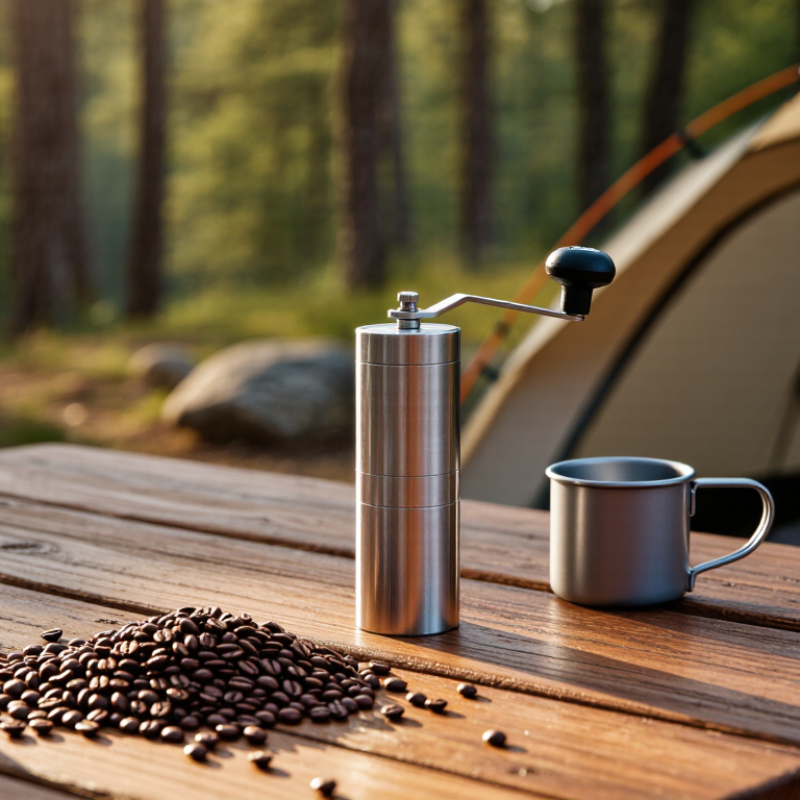
A portable coffee grinder for camping is a compact device that grinds whole coffee beans outdoors. Most models use manual burrs or a small battery-powered motor. Burrs crush beans more evenly than basic blade mechanisms. This matters when brewing with a pour-over cone, press, or compact brewer.
A useful grinder should fit inside a small cook kit. It needs a secure lid, a firm grip, and a removable grounds container. Adjustable settings allow coarse grounds for a press and finer grounds for filtered brewing. The Specialty Coffee Association recommends consistent particle size for more controlled extraction.
In my experience, uneven grounds create a muddy cup, even beside a beautiful campsite. I still misjudge grind size sometimes.
Demand for fresh coffee remains strong. The National Coffee Association’s Spring 2024 National Coffee Data Trends report found that 67% of American adults drank coffee the previous day. The International Coffee Organization also reported global coffee consumption of about 177 million 60-kilogram bags in 2023/24. These figures suggest that outdoor drinkers increasingly value reliable preparation away from home.
A portable grinder also reduces dependence on pre-ground coffee. Beans stay fresher when protected from air, heat, and moisture. Manual grinding takes effort, especially for several campers. That weakness is real. Yet the quiet operation, small footprint, and control can outweigh the inconvenience. A thoughtful choice balances grind adjustment, durability, cleaning access, and carrying weight.

Why Choose a Portable Coffee Grinder for Camping?
A portable coffee grinder improves outdoor coffee preparation by grinding beans immediately before brewing. Freshly ground coffee usually preserves more aroma than pre-ground coffee exposed to air. At camp, I notice the difference when steam carries a nutty smell from the cup. The flavor also feels clearer, especially with simple pour-over equipment. It is not magic. Water quality, bean freshness, and brewing temperature still matter.
A manual grinder gives practical control over particle size. A coarser setting can suit a French press, while a finer setting may support faster brewing. Consistent particles help water extract the coffee more evenly. However, cheap or poorly aligned grinders can create excessive dust. I have misjudged grind size outdoors and produced a bitter cup. That mistake taught me to test settings at home before leaving. A compact design also saves space, but hand grinding several servings can become tiring.
Tips: Measure beans before packing them. Store them in an airtight container away from heat. Grind only what you need. Bring a small brush for cleaning, since fine particles collect around the burrs. Keep the grinder dry, and avoid forcing the handle when beans jam. Small detail, big difference. Check the grind before brewing, because changing weather and water temperature can alter the result.
| Evaluation Dimension | Portable Coffee Grinder | Typical Full-Size Grinder | Outdoor Value |
|---|---|---|---|
| Packability | Most manual travel grinders use a compact cylindrical body and can fit inside camping cookware, a coffee mug, or a small equipment pouch. | Full-size grinders generally require more storage space and may need separate protection during transport. | Excellent |
| Power Requirements | Manual models operate without electricity, batteries, or charging equipment. | Electric models require access to a power source, charged batteries, or a compatible power station. | Excellent for remote campsites |
| Grinding Consistency | A well-built burr mechanism can produce a more uniform grind than basic blade-style grinders, supporting more predictable brewing. | Larger burr grinders can offer greater adjustment range and faster grinding, but their performance depends on the model and power source. | Very good |
| Noise Level | Manual grinding produces mechanical sound without the loud motor noise associated with many electric grinders. | Electric motors can be noticeably loud in quiet natural settings. | Excellent |
| Brewing Flexibility | Adjustable grind settings can support coarse grinds for French press, medium grinds for pour-over, and finer grinds for some espresso-style methods. | Full-size grinders often provide a wider adjustment range, especially for high-precision brewing. | Good to very good |
| Typical Batch Size | Many compact manual grinders are designed for approximately one to four individual servings, depending on the grind setting and chamber capacity. | Larger grinders commonly handle more coffee at once and are better suited to groups or repeated brewing. | Best for individuals or small groups |
| Preparation Time | Manual grinding takes physical effort and commonly requires more time than motorized grinding, particularly for fine settings or larger doses. | Electric grinding is usually faster and more convenient when electricity or charged batteries are available. | Efficient for small servings |
| Durability Considerations | Fewer electronic components reduce exposure to battery failure, moisture-related electrical issues, and charging problems. The grinder should still be protected from impacts and grit. | Electric units may require additional care for motors, switches, batteries, and power connections during outdoor use. | Very good when properly protected |
| Cleaning and Maintenance | Simple disassembly and a small cleaning brush are usually sufficient for routine removal of retained grounds. Water should not be used on parts unless the instructions permit it. | Electric grinders may have more internal areas where grounds accumulate and must be kept dry around electrical components. | Good |
| Fuel and Energy Savings | Grinding requires human effort but does not consume campsite electricity or portable power-bank capacity. | Electric grinding draws energy from batteries, generators, vehicles, or portable power stations. | Excellent for lightweight trips |
| Weather Readiness | A manual grinder can be used in locations without reliable power, but coffee equipment should be kept dry and protected from sand, dust, and rain. | Electric equipment needs additional protection from moisture and may be impractical in wet or remote conditions. | Very good with basic protection |
| Best Use Case | Hiking, backpacking, car camping, overlanding, emergency coffee kits, and quiet outdoor mornings. | Large-group camping, base camps with reliable power, or situations where speed and high-volume preparation are priorities. | Highly suitable for portable brewing |
Why Choose a Portable Coffee Grinder for Camping?
A portable coffee grinder keeps fresh grinding possible beside a tent, trail, or quiet lakeside stove. Freshly ground beans usually produce a clearer aroma than pre-ground coffee. During several camping trips, I noticed that grind consistency mattered more than impressive appearance. A compact grinder should fit comfortably in one hand and pack without sharp, loose parts.
Key Features to Consider Before Choosing a Camping Grinder
Choose a burr grinder when possible, because it usually creates more even particles than a basic blade grinder. Consistent particles help prevent a bitter, muddy cup. Look for several grind settings, from coarse grounds for a press to finer grounds for controlled brewing. However, marked settings are not always perfectly accurate. Testing a small batch may still be necessary.
Weight matters on longer hikes, but extreme lightness can reduce durability. A sturdy metal or reinforced body should handle careful outdoor use. Check the handle connection, lid seal, and bean chamber before buying. The grinder should hold enough beans for your planned servings without becoming bulky. Easy cleaning is essential, especially after dusty mornings. Detachable parts help remove trapped oils and fine particles.
Hand grinding takes effort.
A comfortable grip reduces wrist strain, while smooth bearings make each turn easier. I also value a quiet mechanism near sleeping campers. Some portable grinders work well but grind slowly, especially at finer settings. That trade-off is easy to overlook. Think about your brewing method, daily coffee amount, and walking distance before choosing. A practical grinder should serve your routine, not merely look adventurous.
A portable coffee grinder earns its place when camping because fresh grounds preserve aroma and control. Coffee tastes better fresh. The National Coffee Association’s Spring 2024 report found that 67% of American adults drank coffee the previous day. That habit makes reliable outdoor preparation valuable. The Specialty Coffee Association recommends water around 92–96°C and extraction near 18–22%. A hand grinder helps you adjust particle size without electricity. Outdoors, control matters.
Before leaving, inspect the burrs and tighten the adjustment ring. Store whole beans in an airtight container, away from sunlight and moisture. At camp, place the grinder on a stable surface and turn the handle slowly. Rushing creates uneven particles. Weighing the beans improves consistency, although I sometimes skip this step when mornings feel cold and rushed. After brewing, brush out loose grounds. Do not rinse internal parts unless the manufacturer allows it. Moisture can cause residue, odors, or corrosion. Let the grinder dry completely before closing it.
Tips: Carry a small brush and a clean cloth. Keep the grinder inside a dry pouch. Grind only what you need. If the coffee tastes bitter, use a coarser setting or shorter brewing time. If it tastes thin, grind finer. Test changes one step at a time. Camp conditions are imperfect, and that is part of the learning.
Your camping style should decide which portable coffee grinder you carry. A lightweight backpacker needs a compact manual grinder with a sturdy body and few loose parts. It should fit inside a mug or small pouch. Weight matters on steep trails. So does grip.
For car camping, a larger grinder may suit you better. A wider handle, a stable base, and a larger bean chamber make morning brewing easier. If you prepare coffee for several people, check the stated capacity carefully. Grinding enough beans for four cups can become tiring with a tiny model. I learned this beside a windy lake. My compact grinder worked well, but its short handle made each batch slow and awkward.
Your brewing method also matters. Coarse settings support a French press, while medium-fine settings suit many pour-over recipes. Look for clear adjustment steps, because vague settings make repeatable brewing difficult. Steel burrs often handle regular use well, while ceramic burrs can resist heat and corrosion. Neither choice removes the need for cleaning.
Keep this simple. Choose durability over extra features. A grinder with a secure lid prevents beans from spilling into your backpack. A washable catch cup helps when water is limited. I still prefer a few seconds of extra grinding over carrying a fragile electric device. That preference may not fit every camper, especially those with joint pain. Your hands, route, and group size should make the final decision.
Which portable grinder best fits your camping style?
Scores use a 1–5 scale and reflect practical camping characteristics: grind consistency, packability, operation without electricity, and suitability for small-batch brewing. Manual burr grinders are a strong choice for lightweight trips, while battery-powered burr grinders suit campers who prioritize speed and convenience.

© Copyrights Levil Technology Corp 2022